About 46 minutes
Point of Departure — Edition Insights
Space Future
10,441 recorded words. 1 minutes difference from this book's estimate.
View Gutenberg source #50945
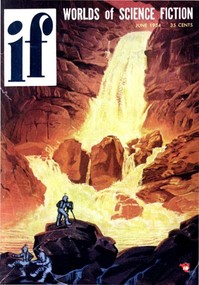
The First Day of Spring — Key Ideas to Explore can be approached with a clearer sense of reading commitment from its source measurements: 10,791 words, 47 min estimated reading time, and 2 detected text sections.
The text analysis averages about 13.4 words per sentence, while the detected sections provide another way to judge how the source is divided.
Project Gutenberg metadata also associates the work with “Science fiction,” connecting these edition facts with the source record’s subject description.
Explore this collection
These alternatives are selected using recorded categories and estimated reading time.
About 46 minutes
Space Future
10,441 recorded words. 1 minutes difference from this book's estimate.
View Gutenberg source #50945About 49 minutes
Space Future
11,055 recorded words. 2 minutes difference from this book's estimate.
View Gutenberg source #51320About 44 minutes
Space Future
10,034 recorded words. 3 minutes difference from this book's estimate.
View Gutenberg source #37448Search stored excerpts and compare books → Choose by your preferences →
Choices use stored catalog measurements. Estimates vary with reading speed. A shared category is a catalog label, not a claim that two books have the same argument or literary quality.
Search reads excerpt text stored with this catalog and links to its associated Gutenberg record. The connection is stored in the site database; this tool does not recheck that every excerpt is word-for-word identical to that external record. Excerpt search does not cover every chapter and does not verify historical publication dates.
Catalog snapshot checked: 2026-09-25. Coverage: 100 public books, 100 available source excerpts.
Read the complete public-domain text at its original source.
Read on Project GutenbergMari Wolf's "The First Day of Spring" opens with a sensory contradiction: Trina rides through a pasture that smells of clover and feels like spring, yet she knows the weather is manufactured. The man at the weather tower has declared it spring, and the days will be lengthened artificially. From the first paragraph, the story establishes a world where nature is a deliberate performance—a fact that becomes the quiet fault line in Trina's romance with Max, a spaceman whose too-white skin marks him as alien to her engineered paradise.
The colony world Trina inhabits is a stage set for comfort. The breeze is cool, the clover smell is “borne in from the east,” and the lakes are refilled for summer swims. But the horizon, Trina reflects, “looked so far away but wasn't really.” The world is small, enclosed, and entirely managed. When Max arrives in his “windmill-like craft,” he calls the world “attractive” but confining. Trina cannot understand why anyone would leave; Max cannot understand how anyone can stay. The story does not resolve this tension—it lets it hang in the air, as artificial as the seasons themselves.
When Trina visits a town on Earth, she is overwhelmed. The houses fill a valley, then climb the slopes. She whispers, “There are so many of them,” and Saari replies, “This is just a small town.” Trina thinks, “There aren't half that many people on the whole world.” The contrast is visceral: her world is a curated village; Earth is a mass of faces, “all different and yet somehow all alike.” The story uses this moment to invert the typical space-colony narrative—here, the colony is the pastoral refuge, and Earth is the alien, suffocating crowd.
Max offers Trina a life in the fields, quiet and familiar, with room to ride. But he adds, almost as an afterthought, that he will be “out in space a good deal of the time.” Trina accepts this, but the story undercuts her relief. Later, in the town cafe, Max ignores her to talk about space with the planet people. Saari, the planet girl, watches and says, “You're different, aren't you? From us, and from them too.” The story leaves open whether difference can be bridged—or whether Trina's festival-time happiness is as temporary as the manufactured spring.
Readers should pay attention to the small, recurring details: the windmill craft, the clover smell, the way Trina's horse snorts at Max's machine. These are not decoration but evidence of a world built on control—and of the forces that resist it. Wolf does not tell us whether Trina and Max will find a middle ground. Instead, she lets the engineered breeze and the crowded streets speak for themselves.
That rainy afternoon, I kept thinking about Trina’s clover-scented world and how its engineered cheer couldn’t hold Max’s restlessness. The longing felt familiar, so I found myself pulling down The Sentimentalists — Context and Discussion instead, wondering if we ever truly belong to the places built around us, or just to the ache of leaving.
Create a short personal record of your experience with this book.