About 51 minutes
Soldier Boy — Context and Discussion
Space Future
11,714 recorded words. 4 minutes difference from this book's estimate.
View Gutenberg source #50848
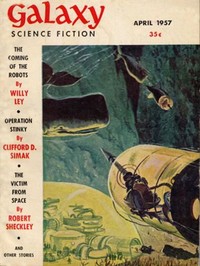
The catalog record for Once a Greech — Context and Discussion provides practical reading context through 12,650 words, 55 min estimated reading time, and 2 detected text sections.
The text analysis averages about 15.8 words per sentence, while the detected sections provide another way to judge how the source is divided.
Project Gutenberg metadata also associates the work with “Science fiction,” connecting these edition facts with the source record’s subject description.
Explore this collection
These alternatives are selected using recorded categories and estimated reading time.
About 51 minutes
Space Future
11,714 recorded words. 4 minutes difference from this book's estimate.
View Gutenberg source #50848About 49 minutes
Space Future
11,055 recorded words. 6 minutes difference from this book's estimate.
View Gutenberg source #51320About 47 minutes
Space Future
10,791 recorded words. 8 minutes difference from this book's estimate.
View Gutenberg source #32760Search stored excerpts and compare books → Choose by your preferences →
Choices use stored catalog measurements. Estimates vary with reading speed. A shared category is a catalog label, not a claim that two books have the same argument or literary quality.
Search reads excerpt text stored with this catalog and links to its associated Gutenberg record. The connection is stored in the site database; this tool does not recheck that every excerpt is word-for-word identical to that external record. Excerpt search does not cover every chapter and does not verify historical publication dates.
Catalog snapshot checked: 2026-09-25. Coverage: 100 public books, 100 available source excerpts.
Read the complete public-domain text at its original source.
Read on Project GutenbergEvelyn E. Smith's Once a Greech (1957) opens with a captain's snarl: the discovery of intelligent life on Flimbot, the nineteenth moon of the eleventh planet in the Virago System, is treated as a personal inconvenience. The narrator's dry, ironic voice immediately establishes a tone of bureaucratic exasperation—the Interstellar Exploration, Examination (and Exploitation) Service is more concerned with fuel budgets and personnel annoyances than with first contact. The ship's name, S. S. Herringbone, hints at the story's fondness for absurd detail.
Captain Iversen presides over a crew he considers a “conglomeration of fools,” yet his own error—assuming all forty-six moons were cinders—sets the plot in motion. The first officer defends Harkaway, the hapless scout who made the actual discovery, as “not a bad boy … just a thought incompetent.” This layered incompetence is a running pattern: the captain blames others for his own mistake, the crew blames Harkaway for succeeding, and everyone later blames the alien creature for their own embarrassment. Smith uses the captain's internal monologue to expose the gap between self-image and reality: Iversen admits his error was “really such a small mistake,” while the narrative quietly undermines him.
The central conflict hinges on a semantic failure. Harkaway mistook the Flimbotzik's explanation of their zoology for theology, leading him to believe in a transmigration of souls that never existed. The captain later gloats: “the whole difficulty was a semantic one.” This misunderstanding is mirrored by the alien's own metamorphoses—it shifts from a zkoort to a chu-wugg, and eventually to a greech, each form prompting new reactions from the crew. The creature's transformations are not mystical but biological, yet the humans persist in reading spiritual meaning into them. Smith underscores the comedy of projection: the crew's theories reveal more about their own biases than about the alien.
Amid the farce, Dr. Smullyan repeatedly intones “Doom, doom, doom,” a refrain that the captain dismisses as a joke. The first officer notes that Smullyan “has never been wrong,” and the crew regards him with “respectful awe.” This creates a tension between the comic surface and an undercurrent of genuine threat. The doctor's final muttered line—“Only Man is vile”—suggests a darker reading of the events. The excerpts do not reveal whether his predictions come true, but his presence ensures that the story's tone remains unsettled, shifting between slapstick and unease.
Readers should pay attention to the gap between what characters say and what the narrator implies. Smith's prose rewards close attention to word choice—the captain's “Baham!” and the doctor's somber interjections are not mere color but signals of the story's dual nature. The excerpts leave the resolution ambiguous, so the full novella may either confirm or complicate the comic frame.
Rereading Once a Greech this afternoon, I kept circling back to that doctor’s quiet dread—how humor barely masks the vast, unknowable other. It reminded me of the way Sight Gag — Inside the Classic peels back its own gags, letting something lonely breathe beneath the laughter. A similar ache, I suppose, tucked into the seams of very different stories.
Your answers remain private and are stored only in this browser.