About 34 minutes
Summer Snow Storm — Edition Insights
Social Speculation
7,677 recorded words. 0 minutes difference from this book's estimate.
View Gutenberg source #26968
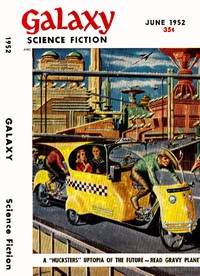
This digital edition of The Luckiest Man in Denv — Text and Context is described by source-level measurements including 7,682 words, 34 min estimated reading time, and 1 detected text section.
The text analysis averages about 14.8 words per sentence, while the detected sections provide another way to judge how the source is divided.
Project Gutenberg metadata also associates the work with “Science fiction,” connecting these edition facts with the source record’s subject description.
Explore this collection
These alternatives are selected using recorded categories and estimated reading time.
About 34 minutes
Social Speculation
7,677 recorded words. 0 minutes difference from this book's estimate.
View Gutenberg source #26968About 34 minutes
Social Speculation
7,812 recorded words. 0 minutes difference from this book's estimate.
View Gutenberg source #51232About 35 minutes
Social Speculation
7,971 recorded words. 1 minutes difference from this book's estimate.
View Gutenberg source #51241Search stored excerpts and compare books → Choose by your preferences →
Choices use stored catalog measurements. Estimates vary with reading speed. A shared category is a catalog label, not a claim that two books have the same argument or literary quality.
Search reads excerpt text stored with this catalog and links to its associated Gutenberg record. The connection is stored in the site database; this tool does not recheck that every excerpt is word-for-word identical to that external record. Excerpt search does not cover every chapter and does not verify historical publication dates.
Catalog snapshot checked: 2026-09-25. Coverage: 100 public books, 100 available source excerpts.
Read the complete public-domain text at its original source.
Read on Project GutenbergThe story opens on the eighty-ninth level of Denv, where Reuben, an Atomist from the eighty-third, receives a pair of binoculars that go opaque—a small but telling malfunction that immediately signals distrust. His host, Almon, a Maintainer, dismisses it with a curse, but Reuben's inward curse reveals a man wary of commitment. The setting is a vertical society: levels denote rank, and the vista from above is a privilege. Reuben's forced appreciation of the view, his cryptic request to go higher, and Almon's hasty refusal all establish a world where even looking upward is a political act.
The excerpts repeatedly anchor status to physical elevation. Reuben descends from the eighty-ninth level to his “Spartan floor” on the eighty-third, passing through “gradually less luxurious levels.” Selene, Griffin's woman, is awed that Reuben has visited the eighty-ninth; she murmurs she has “never been” that high. The general later speaks of looking from the ninety-fifth or hundredth level as an aspiration. This vertical stratification is not just backdrop but the story's central metaphor for power. The characters' identities are tied to their level and function: Atomist, Maintainer, May's man, Rudolph's man. The opening dialogue—with its coded warnings and feigned stupidity—shows that every interaction is a negotiation of rank.
A key plot turn hinges on a double—a spy substituted for Reuben. The general accuses Reuben of being a faulty double, citing a forged left thumbprint and artificially darkened hair. But the Maintainers check: “He's Reuben” and “Hair's natural.” The general then backtracks, claiming the files were tampered with. This moment of doubt is never fully resolved in the excerpts; the reader is left uncertain whether Reuben is genuine or a sleeper agent. The double's purpose was to sabotage attack warheads under post-hypnotic suggestion, a scheme that implicates both May and Rudolph. The story thus plays with identity as a bureaucratic construct—cards, prints, hair samples—that can be manipulated.
General May, Reuben's patron, is a man sustained by green capsules. He pops them “hurriedly” and “fumbled out” more, even as Reuben warns him. May admits the capsules are only “temporary” but takes a fourth anyway. His behavior reveals a leader who has lost the thrill of planning; the trap snapping no longer gives him the same high. He contrasts himself with Rudolph, who “doesn't need the capsules because he doesn't ask questions.” May's drug dependency underscores the story's theme of burnout in a perpetual war. His final offer to Reuben—to “work” by having his “world stood on its head”—suggests a desperate attempt to pass on a dangerous mission before the capsules stop working.
May reveals that he has been outside Denv, a fact that shocks Reuben. The outside is described as “ground pocked and torn up by shorts and overs from Ellay and us,” but farther east there are “grass, trees, flowers” and places to grow food. This pastoral image contrasts sharply with the sterile, stratified city. May's questions about origins—who built Denv, who started the reactors and hydroponics—point to a forgotten history. He found a puzzling document about Colorado River water rights, which he speculates might be the start of the conflict. This moment shifts the story from political intrigue to a broader mystery: how did this world begin, and can peace be made? The excerpts cut off before May's plan is fully explained, leaving the reader with a tantalizing hint of a larger revelation.
These excerpts offer a compact but layered introduction to a story that balances spycraft with social commentary. The reader should pay attention to small details—the opaque binoculars, the green capsules, the mention of a river—as they accumulate into a critique of a society built on hierarchy and suspicion. The incomplete ending invites speculation about what lies beyond Denv's walls and whether Reuben will embrace May's radical vision. The narrative rewards close reading of its dialogue and setting, where every level and every glance carries weight.
Rereading The Luckiest Man in Denv, I kept returning to that binocular exchange—how trust flickered behind glass, uncertain of what it saw. It reminded me of the quiet unease I felt while working through Psychotennis, Anyone? — Reading Notes, where every serve hides a second intention. Paranoia, it seems, is just another way of paying attention. I left both books on the same shelf, feeling oddly seen.
Your answers remain private and are stored only in this browser.