About 63 minutes
Seed of the Arctic Ice — Story, Setting & Ideas
Social Speculation
14,293 recorded words. 2 minutes difference from this book's estimate.
View Gutenberg source #32029
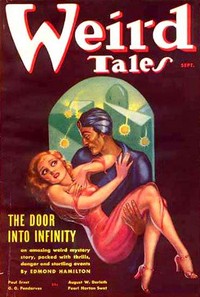
This digital edition of Mask of Death — Reading Notes is described by source-level measurements including 13,927 words, 1 hr 1 min estimated reading time, and 2 detected text sections.
The text analysis averages about 14.5 words per sentence, while the detected sections provide another way to judge how the source is divided.
Project Gutenberg metadata also associates the work with “Science fiction,” connecting these edition facts with the source record’s subject description.
Explore this collection
These alternatives are selected using recorded categories and estimated reading time.
About 63 minutes
Social Speculation
14,293 recorded words. 2 minutes difference from this book's estimate.
View Gutenberg source #32029About 70 minutes
Social Speculation
15,950 recorded words. 9 minutes difference from this book's estimate.
View Gutenberg source #51072About 51 minutes
Social Speculation
11,712 recorded words. 10 minutes difference from this book's estimate.
View Gutenberg source #29727Search stored excerpts and compare books → Choose by your preferences →
Choices use stored catalog measurements. Estimates vary with reading speed. A shared category is a catalog label, not a claim that two books have the same argument or literary quality.
Search reads excerpt text stored with this catalog and links to its associated Gutenberg record. The connection is stored in the site database; this tool does not recheck that every excerpt is word-for-word identical to that external record. Excerpt search does not cover every chapter and does not verify historical publication dates.
Catalog snapshot checked: 2026-09-25. Coverage: 100 public books, 100 available source excerpts.
Read the complete public-domain text at its original source.
Read on Project GutenbergPaul Ernst's Mask of Death opens with a meticulously detailed summer resort, Blue Bay, built at a cost of eighteen million dollars and described as 'the last word in summer resorts.' The formal opening night is a spectacle of lights, crowded lobbies, and a floor show under a full moon. Yet this glittering scene is immediately undercut by a strange paralysis that strikes victims mid-motion, turning them into statues. The contrast between lavish wealth and sudden stillness sets the tone for a story where time itself seems to falter.
The narrative quickly introduces Doctor Satan, a villain who uses a small, angular cage to dissolve walls into 'nothingness' and alter reality. His device, described as a 'model in gleaming steel of a problem in solid geometry,' has bars that shift angles to produce impossible effects. The story's tension lies in the collision of mundane luxury with the uncanny, as detective Ascott Keane pieces together clues from stopped watches and motionless roulette wheels.
Ernst invests Doctor Satan's device with a precise, almost mathematical strangeness. The cage is 'an inch wide by perhaps three and a half inches square,' but 'no two corresponding sides of the little cage were quite parallel.' This subtle asymmetry is key: moving one bar alters an angle, and the wall dissolves. The description avoids vague mysticism, grounding the horror in a warped geometry that feels both scientific and sinister. The device's effect—turning a street into 'a barren plain strewn with rocky shale, like a landscape on the moon'—suggests a displacement in space, not mere illusion.
This focus on angles and parallelism recurs in the paralysis afflicting victims. Watches stop, roulette wheels barely move, and people freeze mid-gesture. Keane observes that a roulette wheel 'apparently moved a fraction of an inch' over forty-five minutes, hinting at a slowed or arrested flow of time. The device and the paralysis share a logic of distorted motion: just as the cage's non-parallel sides create a spatial rift, the victims are caught in a temporal rift. Ernst does not explain the mechanism, but the pattern is consistent.
The resort's opulence is described with almost clinical specificity: 'eighteen million dollars,' 'fine road to New York,' 'planes and busses.' Every home is lit, every store open, even if empty. This excess creates a stage for disaster. The wealthy Mathew Weems, 'partially bald, a little too stout,' sits alone at a ringside table, 'staring at the dancer with sensual lips parted.' His vulnerability is tied to his conspicuous consumption—he is a target precisely because of his visibility and wealth.
Ernst contrasts the resort's artificial perfection with the fragility of its inhabitants. The paralysis strikes in the most public, crowded spaces: the roof garden, the roulette room, the conference room. The victims are not isolated but surrounded by luxury. The villain, Doctor Satan, operates from within this world, using a 'gold-link purse' to carry his geometric weapon. The story suggests that the very structures built to display wealth become traps when reality warps.
Keane's investigation hinges on anomalies of motion. The watches taken from victims, except Weems, are missing, but Weems's watch 'won't run' despite being 'absolutely in good order.' The roulette wheel's ivory ball 'stays on a slant instead of rolling down into a slot,' yet the wheel itself seems to have moved slightly. These details are not merely atmospheric; they form a pattern. Keane notes that the wheel 'apparently moved a fraction of an inch' while he was in the room, suggesting a residual effect of the paralysis.
Ernst uses these physical clues to build a case without supernatural explanation. The stopped watch and stalled wheel are evidence of a force that affects time or motion locally. Keane's method is empirical: he lists points, tests hypotheses, and cross-references witness accounts. The story's tension arises from the gap between the ordinary setting—a resort, a library, a hotel room—and the extraordinary phenomena that leave physical traces. The reader, like Keane, must interpret these traces without full knowledge of the mechanism.
Mask of Death rewards attention to its physical details: the exact dimensions of the cage, the position of a roulette ball, the angle of a watch hand. Ernst builds his weird tale not on vague horror but on precise, almost architectural anomalies. Readers may find that the story's power lies in its restraint—the villain's device is never fully explained, and the paralysis remains a puzzle. Approach the text as Keane does: observe what moves, what stops, and what changes shape.
The rain kept the afternoon slow, and I found myself stuck on the paralyzed guests in Mask of Death—that frozen stillness against the resort’s lavish motion. Later, idly, I picked up Man of Distinction — A Closer Reading, and the same quiet tension surfaced there, wealth holding its breath. It felt less like a discovery than a familiar echo in another room.
Use these questions to collect your thoughts before moving on.