About 34 minutes
Summer Snow Storm — Edition Insights
Social Speculation
7,677 recorded words. 0 minutes difference from this book's estimate.
View Gutenberg source #26968
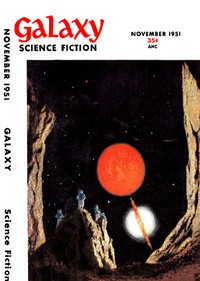
The catalog record for Psychotennis, Anyone? — Reading Notes provides practical reading context through 7,812 words, 34 min estimated reading time, and 1 detected text section.
The text analysis averages about 13.7 words per sentence, while the detected sections provide another way to judge how the source is divided.
Project Gutenberg metadata also associates the work with “Science fiction,” connecting these edition facts with the source record’s subject description.
Explore this collection
These alternatives are selected using recorded categories and estimated reading time.
About 34 minutes
Social Speculation
7,677 recorded words. 0 minutes difference from this book's estimate.
View Gutenberg source #26968About 34 minutes
Social Speculation
7,682 recorded words. 0 minutes difference from this book's estimate.
View Gutenberg source #50835About 35 minutes
Social Speculation
7,971 recorded words. 1 minutes difference from this book's estimate.
View Gutenberg source #51241Search stored excerpts and compare books → Choose by your preferences →
Choices use stored catalog measurements. Estimates vary with reading speed. A shared category is a catalog label, not a claim that two books have the same argument or literary quality.
Search reads excerpt text stored with this catalog and links to its associated Gutenberg record. The connection is stored in the site database; this tool does not recheck that every excerpt is word-for-word identical to that external record. Excerpt search does not cover every chapter and does not verify historical publication dates.
Catalog snapshot checked: 2026-09-25. Coverage: 100 public books, 100 available source excerpts.
Read the complete public-domain text at its original source.
Read on Project GutenbergLloyd Williams's 1951 story opens not with a conventional tennis match but with a spectator's anxiety. Grant watches his friend Tony play a charity match against Slag, a black-robed player whose head begins a 'slow wobble' as the ball executes 'perihedral swings.' The crowd roars for a 'thumbs down' finish, and Grant's worry is palpable: 'It's not like Tony—does he want to get killed?' The telepathic bond between Grant and Bee, who 'throbbing mind touched his,' establishes that this is a world where psychic ability is both a sport and a source of peril.
The story's setting is a tennis court transformed into a battlefield of minds. Players use telekinesis to control a ball that 'took a savage turn' and 'lanced in perihedral swings.' The crowd's reaction is visceral: they stand and roar, ready to sacrifice a hero. Williams emphasizes the physical toll of psychic concentration: Grant feels 'an invading blackness to his mind' as he works the sphere. The match is described in terms of 'pure mathematics' and 'harmonic variations,' blending sport with abstract mental combat. The 'tele-proof screen' separating spectators from players hints at the danger—psychic energy can leak through, as Bee's mind touches Grant's. This is not a game of skill but of will, where defeat means mental collapse.
Grant's internal conflict is as central as the match. He recalls that he 'had unloosed a monster on the world' and must pay for it. The story weaves his guilt into the action: 'Win or lose, live or die, he was doomed.' His relationship with Bee is strained—she is both a child he does not love and a woman who does not love him. The match becomes a penance. Williams uses the tennis duel to externalize Grant's psychological state: his depression 'knotted itself into mind-snaring tangles.' The opponent Slag, whose victories are mysterious, represents an unsolved puzzle. Grant's goal is not just victory but understanding: 'If he quickly whirled Slag into dazed defeat, the real mystery might never be solved.'
Williams structures the narrative around contrasts in control. Tony's graceful 'corondo' pattern contrasts with Slag's 'crude' shots. Grant's own style is described as 'savage' and 'furious,' yet he finds no pleasure in Slag's distress. The ball's movements are choreographed: 'helical loops, thrice differentiated by harmonic variations.' The story repeatedly uses the word 'control' in both psychic and emotional senses. Grant's failure to control his guilt mirrors his struggle to control the ball. The excerpt ends with Grant feeling 'as if his own mind' is being invaded, suggesting that the psychic duel is also a battle against inner demons. The pattern of the match—slow start, escalating complexity, sudden crisis—mirrors the psychological arc of the protagonist.
Readers should pay attention to the way Williams uses the tennis match as a metaphor for mental struggle. The story's tension comes not from the outcome of the game but from Grant's internal reckoning. The excerpts leave unresolved the nature of Slag's secret and the full extent of Grant's past transgression. The narrative rewards close reading of the ball's motion as a reflection of the characters' psychic states.
The rain drummed against the window that afternoon, and I kept circling back to the guilt Grant carried between points. It was the same hollowed-out feeling I found later, almost by accident, in Confidence Game — Inside the Classic. Where Slag hid his advantage, that book whispered about why con men hide their own weakness first. Strange, how a psychic serve and a card sharp’s gaze land on the same quiet unease. I closed both, letting the rain decide what to wash away.
Your answers remain private and are stored only in this browser.