About 51 minutes
Zero Data — Themes and Context
Social Speculation
11,712 recorded words. 0 minutes difference from this book's estimate.
View Gutenberg source #29727
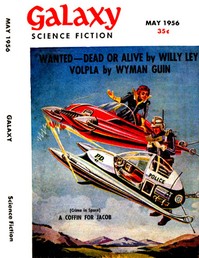
For Volpla — Key Ideas to Explore, the stored edition analysis reports 11,623 words, 51 min estimated reading time, and 2 detected text sections.
The text analysis averages about 13.1 words per sentence, while the detected sections provide another way to judge how the source is divided.
Project Gutenberg metadata also associates the work with “Science fiction,” connecting these edition facts with the source record’s subject description.
Explore this collection
These alternatives are selected using recorded categories and estimated reading time.
About 51 minutes
Social Speculation
11,712 recorded words. 0 minutes difference from this book's estimate.
View Gutenberg source #29727About 48 minutes
Social Speculation
10,849 recorded words. 3 minutes difference from this book's estimate.
View Gutenberg source #49651About 48 minutes
Social Speculation
10,859 recorded words. 3 minutes difference from this book's estimate.
View Gutenberg source #51075Search stored excerpts and compare books → Choose by your preferences →
Choices use stored catalog measurements. Estimates vary with reading speed. A shared category is a catalog label, not a claim that two books have the same argument or literary quality.
Search reads excerpt text stored with this catalog and links to its associated Gutenberg record. The connection is stored in the site database; this tool does not recheck that every excerpt is word-for-word identical to that external record. Excerpt search does not cover every chapter and does not verify historical publication dates.
Catalog snapshot checked: 2026-09-25. Coverage: 100 public books, 100 available source excerpts.
Read the complete public-domain text at its original source.
Read on Project GutenbergThe story opens with a scientist's terse, clinical observation: 'There were three of them.' This blunt declaration, set against a backdrop of 'limp little mutants' in a metabolic accelerator, establishes a voice that is at once proud and proprietary. The narrator's excitement—'My heart took a great bound'—is immediately undercut by the mundane intrusion of his daughter's rollerskates, a juxtaposition that defines the story's tonal shifts.
Guin's prose moves between technical jargon ('metabolic accelerator,' 'intravenous needles') and domestic banter, as when the narrator corrects his daughter's grammar mid-sentence. This oscillation between the cosmic and the quotidian is the story's central structural device, creating a rhythm of discovery and distraction.
The narrator's language reveals a man split between two roles: the detached creator and the exasperated father. His internal monologue is precise and goal-oriented—'Volplas at last. Three of them'—while his dialogue with his daughter is patient yet condescending, as when he explains 'tightly enough' versus 'tight enough.' This dual register is most apparent when he describes the mutants' development: 'The males now carried little stone-tipped spears... The women wore bluejay feathers on their heads.' The clinical catalog of cultural artifacts clashes with the fairy-tale image of feathered headdresses, hinting at the narrator's inability to see his creations as anything but specimens.
His wife's accusation—'Your whole life is a secret from us'—exposes the cost of this double life. The narrator's voice, so confident in the lab, becomes defensive and blustering at home. Guin uses this contrast to suggest that the scientist's control is an illusion, maintained only by compartmentalizing his domestic and professional selves.
The story's pace is governed by interruptions. The initial triumph of creating the volplas is immediately broken by his daughter's arrival: 'I heard my daughter's running feet... and her rollerskates banging at her side.' This pattern repeats throughout the excerpts—a moment of scientific wonder is punctured by a domestic demand. When the narrator discovers the volplas in his daughter's room, the pace shifts from measured observation to frantic action: 'I went up the stairs three at a time and burst into my daughter's room.'
Guin controls tempo through sentence length. The early descriptions of the volplas' development are leisurely, with compound sentences listing their achievements. But when the wife confronts the narrator, the dialogue becomes staccato: 'A fine secret!' I yelled. 'Didn't it occur to you this might be dangerous?' The rapid exchange mirrors the loss of control, as the scientist's carefully managed experiment dissolves into family argument.
Two details recur with increasing significance: the daughter's rollerskates and the volplas' speech. The skates appear first as a prop for a fatherly task—'I got down and shoved one saddle shoe into a skate'—but later become a symbol of the daughter's independent world, one the narrator cannot access. Similarly, the volplas' acquisition of English, from a simple 'Hello there, King Arthur' to reading books, marks a transfer of agency from creator to creation.
The narrator's naming of the mutants—'I had been calling them volplas for ten years'—reveals his desire to control through language. Yet the volplas' ability to speak English, taught by his daughter, subverts that control. The detail of the chief volpla 'sitting at home as comfortable as you please' with a fire and a roasting sparrow suggests a parallel domesticity that mirrors and mocks the narrator's own household. These recurring elements build a quiet argument about the limits of scientific authority.
Readers should attend to the story's tonal shifts, which are its primary engine. The narrator's voice is unreliable not because he lies, but because he consistently misjudges the emotional stakes of his own actions. The volplas themselves remain opaque, seen only through the narrator's proprietary gaze. This limited perspective is the story's strength, forcing the reader to infer the volplas' interior lives from the gaps in the scientist's narration. The result is a tale that is as much about the failure of objectivity as it is about flying mutants.
There’s a moment in Volpla where the scientist stops seeing his creations as variables and starts seeing them as family, and I felt that shift in my own chest. It’s that quiet surrender to something you thought you controlled. Bridge Crossing — Story, Setting & Ideas touches a similar kind of acceptance, I think, in its own way. Hard to explain, but it lingers.
Save your reaction, strongest insight, and memorable passage.