About 35 minutes
The Graveyard of Space — Context and Discussion
Space Future
7,865 recorded words. 0 minutes difference from this book's estimate.
View Gutenberg source #32133
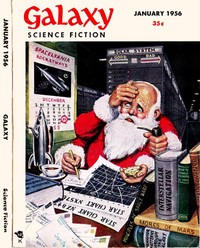
The Snare — Context and Discussion can be approached with a clearer sense of reading commitment from its source measurements: 7,927 words, 35 min estimated reading time, and 1 detected text section.
The text analysis averages about 13.8 words per sentence, while the detected sections provide another way to judge how the source is divided.
Project Gutenberg metadata also associates the work with “Science fiction,” connecting these edition facts with the source record’s subject description.
Explore this collection
These alternatives are selected using recorded categories and estimated reading time.
About 35 minutes
Space Future
7,865 recorded words. 0 minutes difference from this book's estimate.
View Gutenberg source #32133About 35 minutes
Space Future
7,936 recorded words. 0 minutes difference from this book's estimate.
View Gutenberg source #33934About 36 minutes
Space Future
8,167 recorded words. 1 minutes difference from this book's estimate.
View Gutenberg source #50818Search stored excerpts and compare books → Choose by your preferences →
Choices use stored catalog measurements. Estimates vary with reading speed. A shared category is a catalog label, not a claim that two books have the same argument or literary quality.
Search reads excerpt text stored with this catalog and links to its associated Gutenberg record. The connection is stored in the site database; this tool does not recheck that every excerpt is word-for-word identical to that external record. Excerpt search does not cover every chapter and does not verify historical publication dates.
Catalog snapshot checked: 2026-09-25. Coverage: 100 public books, 100 available source excerpts.
Read the complete public-domain text at its original source.
Read on Project GutenbergThe story opens with a precise lunar setting: the Mare Serenitatis, described as a smooth pumice surface dotted with rock islands under cold, indifferent stars. The narrator notes that their bounding path leaves dust clouds that settle slowly in light gravity—a detail that grounds the science-fiction premise in physical specificity. The discovery of a smooth, curving metal object, a quarter-mile high and possibly part of a two-mile sphere, immediately shifts the narrative from exploration to mystery.
The excerpts devote careful attention to the Moon's surface, using terms like "pumice" and "Mare Serenitatis" to evoke a real lunar geography. The narrator describes the dust clouds raised by their leaps and the dim starlight insufficient for normal vision—observations that emphasize the environment's strangeness. The alien object is introduced as "smooth," "featureless," and "alien," yet clearly artificial. The characters debate its shape and size, with one suggesting it might be a perfect sphere mostly buried. This initial encounter sets up the central enigma without revealing the object's purpose.
Once inside the alien ship, the story focuses on interpersonal conflict. Kane, driven by a desire for fame, initially prevents the narrator from contacting Lunar City. Later, after the group is trapped, Kane becomes erratic: he gets drunk, insults the alien race, and physically harms himself. The machine's plea—"Please don't hurt yourself"—reveals that the aliens want their captives undamaged. Kane then ties up the others, claiming a plan to escape. His actions highlight a theme of desperation and the breakdown of cooperation under pressure. The narrator reflects that the aliens, having predicted humanity's technological progress, left the ship as "bait."
The alien machine speaks in a calm, pleading tone, revealing that its masters created no means to restrain the humans physically. It can only use language to influence them. This limitation becomes a plot point: Kane realizes that the aliens' reliance on a non-coercive system might be exploitable. The narrator muses that to a rabbit in a snare, mankind must seem clever—a metaphor that underscores the story's central puzzle. The excerpts do not reveal the solution, but they establish that the trap is psychological as much as physical, and that the characters must rely on their wits rather than tools or weapons.
Readers should pay attention to how the story balances its science-fiction trappings—lunar setting, alien technology—with a tight focus on human behavior under duress. The excerpts offer no resolution, but they set up a puzzle that hinges on the machine's inability to physically restrain the captives. The narrative voice remains grounded in the narrator's observations, avoiding melodrama even as tensions escalate. This restraint makes the story's central question—how to escape a trap designed by beings who foresaw humanity's technological path—all the more intriguing.
Reading about that metal sphere on the Moon, I thought of my father’s old astronomy atlas, its pages worn at the creases. Trapped inside that lunar trap, the men’s quiet desperation felt familiar. It reminded me of a night spent with Unveiling a Parallel: A Romance — Reading Notes, where the strangeness of another world slowly becomes a mirror for one’s own constraints, leaving a strange, hollow peace.
Answer a few questions and save a private reflection on this device.