About 27 minutes
Competition — Reading Companion
Machines Invention
5,994 recorded words. 0 minutes difference from this book's estimate.
View Gutenberg source #29632
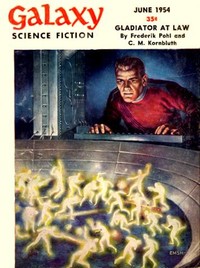
High Man — Context and Discussion can be approached with a clearer sense of reading commitment from its source measurements: 5,983 words, 27 min estimated reading time, and 1 detected text section.
The text analysis averages about 18.2 words per sentence, while the detected sections provide another way to judge how the source is divided.
Project Gutenberg metadata also associates the work with “Science fiction,” connecting these edition facts with the source record’s subject description.
Explore this collection
These alternatives are selected using recorded categories and estimated reading time.
About 27 minutes
Machines Invention
5,994 recorded words. 0 minutes difference from this book's estimate.
View Gutenberg source #29632About 30 minutes
Machines Invention
6,700 recorded words. 3 minutes difference from this book's estimate.
View Gutenberg source #26883About 30 minutes
Machines Invention
6,712 recorded words. 3 minutes difference from this book's estimate.
View Gutenberg source #51240Search stored excerpts and compare books → Choose by your preferences →
Choices use stored catalog measurements. Estimates vary with reading speed. A shared category is a catalog label, not a claim that two books have the same argument or literary quality.
Search reads excerpt text stored with this catalog and links to its associated Gutenberg record. The connection is stored in the site database; this tool does not recheck that every excerpt is word-for-word identical to that external record. Excerpt search does not cover every chapter and does not verify historical publication dates.
Catalog snapshot checked: 2026-09-25. Coverage: 100 public books, 100 available source excerpts.
Read the complete public-domain text at its original source.
Read on Project GutenbergJay Clarke's High Man (1954) unfolds entirely through letters and cables, a choice that shapes both its pace and its revelations. The story opens with a series of increasingly frantic messages from Anne Harrodsbury in London to her fiancé Roger Brisby in New York, her tone shifting from affectionate concern to threats of legal action. Roger's belated reply introduces Professor Phelps-Smythe Burdinghaugh, a scientist whose career has been marked by demolished laboratories and whose latest project is an anti-gravity belt. The epistolary form allows Clarke to layer perspectives, as each letter reframes earlier events.
The story's tension is built through contrasting voices in the letters. Anne's early notes are warm but quickly turn accusatory: she writes of being "worried" and then declares she "won't stand for it." Her cable is a cascade of threats—breach of promise, desertion, extortion, fraud. Roger's reply, by contrast, is measured and explanatory, adopting a tone of injured innocence. Professor Burdinghaugh's letters are breezy and self-deprecating, describing himself as "fiftyish and rathe" and admitting to a fondness for "good food and drink." Each character's voice reveals their strategy: Anne's escalating demands, Roger's calculated patience, the Professor's disarming charm.
The anti-gravity belt is the story's central invention, but Clarke uses it less for scientific speculation than as a catalyst for deception and reversal. Roger describes the Professor's work as a "lifelong project" that has already destroyed sixteen physics laboratories. The belt itself is never fully explained; instead, its significance lies in how it is exploited. Roger's final letter reveals he has patented the belt and is manufacturing it for toy spaceships—a mundane, profitable application that undercuts the Professor's grand ambitions. The belt becomes a token in a game of one-upmanship, its actual function secondary to its value as intellectual property.
The story's structure mirrors its theme of reversal. Roger begins as a man dependent on Anne's money, but by the final letter he is the one in control, dismissing the Professor's claim to Anne's fortune with a casual "You win." The Professor, who seemed to have outmaneuvered Roger, is left with Anne's "untouchable trusts" while Roger profits from the belt. The closing line—"Pity you hadn't thought about patenting the belt"—encapsulates the story's ironic view of ambition and cleverness. Clarke leaves the reader with a sense that the true victory belongs to whoever understands the rules of the game, whether romantic or commercial.
Readers attentive to the epistolary form will notice how each letter revises the previous one, creating a layered narrative where no single account is complete. The gaps between letters—the weeks of silence, the unrecorded conversations—are as telling as the words on the page. High Man rewards a careful reading of tone and timing, where a shift from "dearest" to "My dear" can signal a change in power.
I finished High Man — Context and Discussion the other night, still feeling the ache of those letters, how trust bends so quietly. It made me think of the Don't Shoot — Reading Companion I kept beside it, a gentler shelf-fellow for lonely evenings. There’s something about old stories that wait for us to return.
A brief reflection can help important ideas stay with you longer.