About 40 minutes
The Scapegoat — Context and Discussion
Other Worlds
9,032 recorded words. 0 minutes difference from this book's estimate.
View Gutenberg source #36719
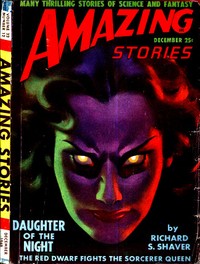
The catalog record for The Plotters — A Reader’s Guide provides practical reading context through 9,059 words, 40 min estimated reading time, and 1 detected text section.
The text analysis averages about 12.8 words per sentence, while the detected sections provide another way to judge how the source is divided.
Project Gutenberg metadata also associates the work with “Science fiction,” connecting these edition facts with the source record’s subject description.
Explore this collection
These alternatives are selected using recorded categories and estimated reading time.
About 40 minutes
Other Worlds
9,032 recorded words. 0 minutes difference from this book's estimate.
View Gutenberg source #36719About 39 minutes
Other Worlds
8,811 recorded words. 1 minutes difference from this book's estimate.
View Gutenberg source #31648About 41 minutes
Other Worlds
9,418 recorded words. 1 minutes difference from this book's estimate.
View Gutenberg source #32900Search stored excerpts and compare books → Choose by your preferences →
Choices use stored catalog measurements. Estimates vary with reading speed. A shared category is a catalog label, not a claim that two books have the same argument or literary quality.
Search reads excerpt text stored with this catalog and links to its associated Gutenberg record. The connection is stored in the site database; this tool does not recheck that every excerpt is word-for-word identical to that external record. Excerpt search does not cover every chapter and does not verify historical publication dates.
Catalog snapshot checked: 2026-09-25. Coverage: 100 public books, 100 available source excerpts.
Read the complete public-domain text at its original source.
Read on Project GutenbergThe story opens not with a spaceship but with a man running blindly through a storm, his nose bleeding from a tree he keeps hitting. The narrative voice is immediate and sensory—wind, rain, thunder, the jab of a broken rib—yet the protagonist cannot remember who he is or why he flees. This disorientation is the reader’s entry point, and the prose stays close to his fractured perception: “In my conscious mind there was only a sort of grayness.” Only after pages of stumbling, falling, and finally being pinned by a falling limb does pain cut through the fog, bringing with it names—Ristal, Kresh, Marko—and the first hints of a mission gone wrong.
The opening sequence is remarkable for how it uses physical suffering to restore identity. The protagonist runs without purpose, crashes into the same tree repeatedly, and feels nothing until a tree limb smashes him flat. Then: “This was excruciating. But it was the pain that cut through the grayness of my mind, and because of that I welcomed it.” The body becomes a tool for narrative recovery—each bruise and scratch peels back another layer of amnesia. The prose mirrors this process: short, breathless sentences during flight, then longer, more coherent paragraphs as awareness returns. Notably, the story never explains why he was running; the cause remains buried, a gap the reader must accept.
Once memory returns, the setting shifts to a barn concealing a Venusian spaceship. The mission is straightforward: extract atomic secrets from Earth scientist Copperd. But Commander Ristal introduces a torture device that amplifies nerve sensitivity, and he threatens to use it on Copperd’s daughter, Beth. The protagonist, Marko, objects: “That’s out,” he says flatly. When Ristal insists, Marko physically intervenes, striking Kresh and defying orders. This moment pivots the story from espionage to personal loyalty. The dialogue is terse and functional, but the conflict is sharp: Marko chooses Beth over his chain of command, and the consequences arrive immediately—a drug injection, a forced escape, and a return to running.
The story is built on two contrasting spaces. The forest is chaotic, repetitive, and hostile: “There was tall grass to slow me down and there were roots to trip me. There was the wind and the thunder and the lightning. And there were always trees.” The ship, by contrast, is enclosed, hierarchical, and filled with machines—a device for pain, a hypodermic needle, a porthole for escape. Both spaces trap the protagonist, but the forest’s dangers are natural and impersonal, while the ship’s are deliberate and cruel. The transition between them is abrupt, and the narrative never fully explains how Marko got from the barn to the forest in the first place—a structural ellipsis that leaves the reader as disoriented as the hero.
Readers should pay attention to the story’s silences: the missing backstory of the chase, the unexplained gap between ship and forest, and the drug-induced stupor that blurs action. The prose is efficient, favoring physical sensation over interior monologue. What emerges is less a puzzle to be solved than a sequence of pressures—gravity, authority, pain—that shape a man’s choices. The title hints at conspiracy, but the text itself is more concerned with the moment-by-moment struggle to stay conscious and loyal.
The rain kept up all afternoon, and I stayed curled in the armchair, letting Marko’s fractured memory settle into my own. His loyalty, so fiercely misplaced, reminded me of something I hadn’t thought of in years—another book where a blade carried more weight than words. I found it on my shelf afterward, dust-filmed, and reread the first page before the kettle boiled. The Sword — Inside the Classic felt like the same storm, just a different window.
A brief reflection can help important ideas stay with you longer.