About 33 minutes
The Hitch Hikers — Reading Notes
Other Worlds
7,501 recorded words. 1 minutes difference from this book's estimate.
View Gutenberg source #32284
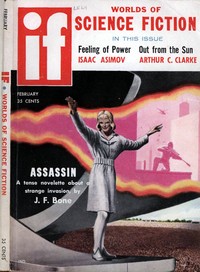
This digital edition of The Hero — Context and Discussion is described by source-level measurements including 7,616 words, 34 min estimated reading time, and 2 detected text sections.
The text analysis averages about 15.1 words per sentence, while the detected sections provide another way to judge how the source is divided.
Project Gutenberg metadata also associates the work with “Science fiction,” connecting these edition facts with the source record’s subject description.
Explore this collection
These alternatives are selected using recorded categories and estimated reading time.
About 33 minutes
Other Worlds
7,501 recorded words. 1 minutes difference from this book's estimate.
View Gutenberg source #32284About 35 minutes
Other Worlds
7,886 recorded words. 1 minutes difference from this book's estimate.
View Gutenberg source #33839About 31 minutes
Other Worlds
6,940 recorded words. 3 minutes difference from this book's estimate.
View Gutenberg source #32697Search stored excerpts and compare books → Choose by your preferences →
Choices use stored catalog measurements. Estimates vary with reading speed. A shared category is a catalog label, not a claim that two books have the same argument or literary quality.
Search reads excerpt text stored with this catalog and links to its associated Gutenberg record. The connection is stored in the site database; this tool does not recheck that every excerpt is word-for-word identical to that external record. Excerpt search does not cover every chapter and does not verify historical publication dates.
Catalog snapshot checked: 2026-09-25. Coverage: 100 public books, 100 available source excerpts.
Read the complete public-domain text at its original source.
Read on Project GutenbergElaine Wilber's "The Hero" opens with a sardonic premise: "Willy was undoubtedly a hero. The difficulty lies in deciding which side he was on." The story immediately signals that heroism and allegiance will be slippery. The narrative voice is wry and economical, describing how the crew of Ship UXB-69311 transforms their vessel into a country club, "liberating" furnishings from the native village and building a still called O'Connors Joy-Juicer. The tone is one of amused detachment, treating the explorers' colonial complacency as both absurd and dangerous.
Wilber's narrator adopts a clinical, almost bureaucratic register that undercuts the crew's self-importance. Phrases like "the Earth Command had stocked the ship with reading material, most of it of a disgustingly educational nature" and "the first hero of the Exploration, a man named O'Connors" use a deadpan delivery to mock the official mindset. The word "liberated" recurs as a euphemism for theft, and the crew's "known war-like qualities" are undercut by their lounging and drinking. The narrator's tone is consistent: it reports absurdities without comment, letting the reader feel the gap between the explorers' self-image and their actual behavior.
The story's pivotal scene hinges on dialogue. The native woman, Catataphinaria, speaks "in perfect English" and dismisses it as "a very stupid language." Her calm, commanding voice—"All right, you men. Come out of there"—contrasts sharply with the crew's whispered, panicked exchanges. Earlier, the men eavesdrop on Willy's seduction attempt, their commentary revealing their assumptions: "He's offering her a drink," "She knocked it off." When the Blaster fires, the dialogue shifts to terse, fearful whispers: "She killed him." Wilber uses dialogue to expose the crew's vulnerability and the natives' hidden competence.
The story's frame—"Willy was undoubtedly a hero. The difficulty lies in deciding which side he was on"—is never resolved within the excerpts. The narrative then jumps to two months after landing, describing the ship's transformation. This structural choice creates a puzzle: the reader must infer Willy's actions from the crew's reactions. The excerpts show Willy's death offstage, reported secondhand. The ending, with the crew ordered to blast off, leaves Willy's heroism ambiguous. The structure forces the reader to weigh the evidence: was Willy a dupe, a traitor, or a pawn? The story withholds a definitive answer.
The setting—a ship remodeled into a "quietly elegant bar" on a planet with "manicured, blue-green sod"—is deliberately artificial. The crew's efforts to domesticate the alien environment ("no effort and no flight of imagination had been spared") reflect their belief that they are in charge. Yet the native furnishings, the "advanced design" chairs, and the "futuristic" bar hint at a sophisticated culture the explorers dismiss. The radar screen, the Bassett Blaster, and the hidden still are objects that shift meaning: the Blaster, a symbol of Earth's power, becomes the instrument of the natives' liberation. The setting underscores the theme of misplaced confidence.
Wilber characterizes the crew through their actions and dialogue rather than direct description. Colonel Mondrain is defined by his "stony" expression and his secret "work on the coming occupation." The scientists, Flandeau and Ankers, cling to their assumptions even when faced with evidence: "We were told that you did not know how to lie, cheat, dissemble, or fight." Catataphinaria is revealed only through her words and her efficient handling of the Blaster. The story's brevity (7,616 words) forces Wilber to rely on telling details: the crew's squirming when she glances at Blunt, the "clumsy" way they descend from their bunks.
Readers should attend to the story's ironic framing and the way Wilber withholds judgment. The title "The Hero" is a question, not a statement. The excerpts suggest that the narrative's true subject is the failure of perception: the explorers see what they expect to see, and the natives exploit that blindness. Pay attention to what is not said—the missing context for Willy's actions, the offstage death, the unresolved allegiance. The story rewards careful attention to its gaps and its wry, understated prose.
The rain kept drumming on the window while I finished Wilber’s story, that quiet reversal where the assumed silence speaks back. It left me thinking about how easily we misread what’s alien. Later, reaching for something else, I found myself holding The Onslaught from Rigel — Background and Themes, and the afternoon stretched, the same uneasy wonder lingering between the pages.
Your answers remain private and are stored only in this browser.