About 38 minutes
Clean Break — Text and Context
Other Worlds
8,702 recorded words. 1 minutes difference from this book's estimate.
View Gutenberg source #32212
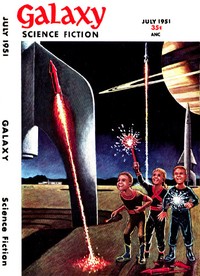
Pen Pal — Text and Context can be approached with a clearer sense of reading commitment from its source measurements: 8,293 words, 37 min estimated reading time, and 1 detected text section.
The text analysis averages about 16.5 words per sentence, while the detected sections provide another way to judge how the source is divided.
Project Gutenberg metadata also associates the work with “Science fiction,” connecting these edition facts with the source record’s subject description.
Explore this collection
These alternatives are selected using recorded categories and estimated reading time.
About 38 minutes
Other Worlds
8,702 recorded words. 1 minutes difference from this book's estimate.
View Gutenberg source #32212About 39 minutes
Other Worlds
8,811 recorded words. 2 minutes difference from this book's estimate.
View Gutenberg source #31648About 35 minutes
Other Worlds
7,886 recorded words. 2 minutes difference from this book's estimate.
View Gutenberg source #33839Search stored excerpts and compare books → Choose by your preferences →
Choices use stored catalog measurements. Estimates vary with reading speed. A shared category is a catalog label, not a claim that two books have the same argument or literary quality.
Search reads excerpt text stored with this catalog and links to its associated Gutenberg record. The connection is stored in the site database; this tool does not recheck that every excerpt is word-for-word identical to that external record. Excerpt search does not cover every chapter and does not verify historical publication dates.
Catalog snapshot checked: 2026-09-25. Coverage: 100 public books, 100 available source excerpts.
Read the complete public-domain text at its original source.
Read on Project GutenbergStephen Marlowe's "Pen Pal" (1951) opens with a paradox: Matilda Penshaws, thirty-three and acutely aware of aging, is a highly educated woman who nevertheless pins her romantic hopes on pen pal columns. The narrator's tone is wry and slightly mocking, noting that Matilda seeks "a faithful Don Juan" who has exhausted worldly pleasures and now wants to sit on a porch. This ironic distance sets up a story that will pivot sharply from domestic comedy to something stranger.
The early scenes, dominated by dialogue between Matilda and her mother, establish a recognizable world of thwarted expectations and maternal nagging. But when Matilda finally meets her latest pen pal, Haron Gorka, the voice shifts. Gorka speaks eagerly of crash landings on Deneb VII and creatures called thlomots that eat plastic. The contrast between Matilda's mundane concerns and Gorka's cosmic tales creates a tension that drives the story's central question: is he mad, or is something else at work?
The narrator's voice in "Pen Pal" is consistently ironic, undercutting Matilda's self-regard with precise observations. Early on, we learn that Matilda "had received her A.B. from exclusive Ursula Johns College and Radcliff had yielded her Masters degree," yet she is an "avid follower of the pen pal columns." The juxtaposition of academic achievement with romantic credulity is delivered without editorializing, letting the contradiction speak for itself. Later, when Matilda dismisses a suitor as "a stuffy Victorian prude," the narrator notes that her mother "nodded regretfully" at the man's hidden feelings—a moment that subtly questions Matilda's judgment. This ironic distance persists until Gorka's entrance, at which point the narrator's tone becomes more neutral, allowing the reader to share Matilda's uncertainty.
The story's pacing is carefully calibrated. The first half moves at a leisurely, conversational pace, filled with domestic details: Matilda's sedan, the porch glider, her mother's inspection of her ring finger. This realism makes the later intrusion of science fiction all the more jarring. When Gorka begins describing Deneb VII, the sentences grow shorter and more fragmented, mimicking Matilda's confusion: "'You know, of course, how frigid Deneb VII is?' Matilda said, 'Beg pardon?'" The shift is abrupt, but Marlowe anchors it in character: Matilda's desire to believe in Gorka delays her realization that his stories are "gibberish." The pacing thus mirrors her gradual awakening, culminating in Gorka's sad resignation: "You are the sixth, and you're no better than the other five."
Several details recur with thematic significance. The number five appears repeatedly: Gorka mentions five previous visitors, and Matilda notes that "the other five cars were now gone" from his driveway. This repetition underscores the story's pattern of failed encounters. Another recurring element is the act of storytelling itself: Gorka's eager, high-pitched voice contrasts with Matilda's pragmatic interruptions. His tales of flaaks and thlomots are not just exotic—they are a test of belief. The librarian, a "gray, broom-stick figure," serves as a framing device, collecting Matilda's account as she has collected five others. These details suggest a structure in which each visitor's story is a variation on a theme, though the excerpts do not reveal the librarian's ultimate purpose.
Readers should attend to the way Marlowe uses voice to signal shifts in genre and expectation. The narrator's early irony gives way to a more ambiguous tone once Gorka appears, leaving the question of his sanity—or his alien origin—unresolved within the excerpts. The story's brevity (under 8,300 words) rewards attention to small details: the repeated number five, the librarian's role, and the precise wording of Gorka's disappointment. These elements build a puzzle that the complete text may or may not solve.
Reading about Matilda’s patience fraying against Haron’s strange stories, I remembered my own grandmother’s letters, full of quiet absurdities I once dismissed. That same slow shift from smug certainty to uneasy wonder happened with Stamped Caution — Text and Context, where a package’s label told a different story than the sender’s words. Both made me sit back, unsure whose reality was more truthful.
Answer a few questions and save a private reflection on this device.