
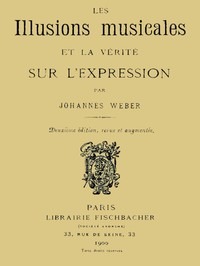
Les illusions musicales et la vérité sur l'expression by Johannès Weber
Read "Les illusions musicales et la vérité sur l'expression by Johannès Weber" Online
This book is available in the public domain. Start reading the digital edition below.
START READING FULL BOOKBook Preview
A short preview of the book’s content is shown below to give you an idea of its style and themes.
Published in 1880, Johannès Weber's book asks a deceptively simple question: what are we really hearing when we listen to music?
The Story
There isn't a plot with characters, but there is a compelling argument. Weber, a musician and scholar, walks us through the common beliefs of his time—that music directly expresses universal emotions. Then, piece by piece, he challenges this. He examines musical elements like rhythm, harmony, and melody, showing how their emotional impact isn't fixed but depends on context, personal experience, and even fashion. The 'story' is his journey to separate the physical reality of sound from the psychological illusions that make music feel so meaningful to us.
Why You Should Read It
What blew me away was how current it feels. Long before neuroscience, Weber was thinking about the listener's mind as the true artist. He talks about how we 'complete' musical phrases in our heads and how cultural habits shape what we find beautiful or moving. Reading it makes you an active participant, listening to your favorite songs with new ears. You start to question your own automatic reactions. It turns music from a mysterious force into a fascinating collaboration between sound and self.
Final Verdict
Perfect for curious music lovers, psychology enthusiasts, or anyone who enjoys historical ideas that feel ahead of their time. It's not a light read—you have to sit with his ideas—but it's incredibly rewarding. Think of it as a deep conversation with a brilliant, slightly old-fashioned friend who makes you see something everyday in a completely new light.
This historical work is free of copyright protections. Thank you for supporting open literature.
Robert Gonzalez
1 month agoSimply put, the clarity of the writing makes this accessible. Worth every second.